One of the most common requests we get at Eidos is for guidance on clinical trials. Specifically, people are often looking for the “magic words” to recruit more LGBTQ+ participants. Why? Clinical trials are expensive to run! Companies want a trial that confirms that their product works for the widest possible audience to ensure the largest possible market size. But if the value of more inclusive trials is so obvious, why do companies struggle to do this?
To better understand this question I spoke with Darshan Kulkarni, an attorney with Doctorates in pharmacy and law. Darshan’s firm focuses on regulatory and compliance law for life science companies. He also hosts Not Alone, a podcast to remind trans and non-binary people that even in challenging times, they are never alone.
Our conversation touched on many important issues including the value of inclusive trials, the challenges of LGBTQ+ recruitment, and why companies would benefit from remaining inclusive even if regulatory policies and practices do not incentivize it.
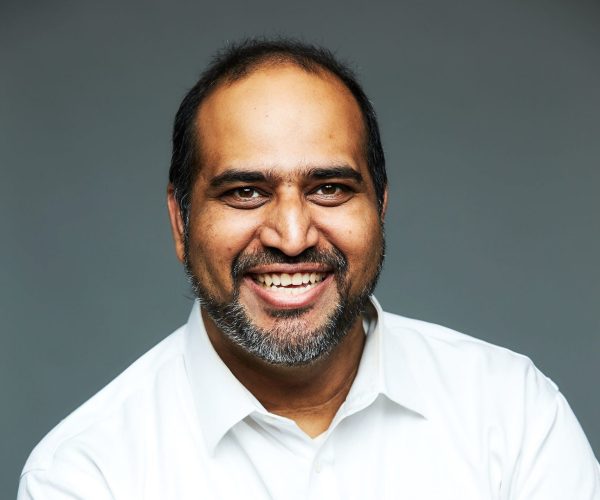
This transcript has been edited and condensed for clarity.
Kevin Schott: Thanks for speaking with me Darshan. I want to look at clinical trials from the Eidosian lens of LGBTQ+ health and health equity. I’m curious, how does recruiting LGBTQ+ people into clinical trials benefit all people and not just LGBTQ+ users? Also, what regulations guide recruiting?
Darshan Kulkarni: I love that we have to justify this, first of all. The fact is that whether you like it or not, LGBTQ+ people are people. So, if you’re trying to make sure that studies represent people, you have to have all people represented.
Now the Supreme Court has said, if you’re not getting all people represented, you have two options: quotas and funnels. Quotas used to be what we’d do in the context of admissions in higher education. And the court came out and said, ‘No, no, no, that’s not good enough. You can’t have a quota.’ So, it stands to reason that in clinical trials, you don’t want a quota of LGBTQ+ individuals.
What the Supreme Court later said was, maybe you need to have a bigger funnel. You need to make sure that diverse people are represented in your studies, because these are going to be the people who use your product. Now, if 10-20% of the population is LGBTQ+, you need to have that funnel be big enough to capture these individuals. For example, if you have a high rate of gay male individuals who are going to be using your drug, doing your studies at places where you wouldn’t see gay male individuals won’t make a big enough funnel.
In 2024, the FDA put out guidance requiring Diversity Action Plans (DAP) so that researchers would have to show how they planned on building their research funnel to include people who should be part of their studies. This was in the very early stages of execution when the Trump administration withdrew the guidance on diversity action plans, primarily in the LGBTQ space and especially around transgender individuals. The current administration sees this as a point of distinction, and therefore, we are seeing it pushed out through the whole system, becoming an issue in clinical trials.
I would expect that in the next couple of years there will be more of a plan to reassess and strengthen the value proposition for having LGBTQ+ individuals represented in research and healthcare.

Kevin Schott: You mentioned the approach the Supreme Court would like us to take is to build a bigger funnel. So, no quotas, but to include more people. I am curious what methods you advise people on to do that?
Darshan Kulkarni: Simple things. For example, if you wanted to do a study on the taste of oregano, would it make sense for you to go to an Italian gathering of some kind? So, maybe go to the Italian Market and meet individuals. In the same way, if you’re trying to make sure that LGBTQ+ people are represented, consider going to a Pride parade. A simple thing like going to an event like that would make sense.
Also, something as simple as asking the physicians, ‘Hey, we’re trying to make sure that we have appropriate representation. Who do you serve?’ For example, in Philadelphia, there’s the William Way Community Center, an LGBTQ+ organization. It might make sense to ask them, ‘Do you guys have any individuals who’d be interested in participating in this study?’ But if you go to Jefferson Hospital or Temple University, you may not get the same representation. So be intentional. Make sure you have the right people who are going to use your product.
Kevin Schott: Something that I know a lot of the affiliated faculty at Eidos are interested in are community-based participatory research experiences. I’m interested if you see any possibility for success with involving people in the design of the trials as a way of getting better representation.

Darshan Kulkarni: For a good 20-something years patient-centered research has been a trend in clinical trials. Which means exactly what you’re talking about. When pharmaceutical companies design cancer studies they tend to go, ‘How long can I extend your life? Can I get you past the first 6 months? The first 1 year?’ They thought if they could do that, you were in great shape. Then they started asking patients.
Patients were fine with their life being extended, but they also wanted to make sure their time here was meaningful. They didn’t want live longer if their quality of life was worse. And that’s not something that occurs naturally to researchers, because it’s so much easier to measure length of life and so much harder to measure quality of life. Talking to patients, talking to the people who will benefit, talking to caregivers, is important.
Involving LGBTQ+ individuals means asking, ‘What are factors that matter to you?’ For example, use of personal pronouns. You aren’t going to want to be part of a trial if you’re not being welcomed when you walk in. If you walk in and let’s say you’re a male-to-female transgender individual, and they go, ‘sir’ that might throw you off. Having that conversation can be complicated because on one hand, you absolutely want to make them feel welcome, and on the other hand, you also want to ensure that their privacy is maintained. So, how do you balance the need to ask about gender and sexuality, and also make people feel welcome? That balance has to be managed. But doing so, and doing that in an appropriate way, makes people feel welcome and want to be part of the healthcare community, and that benefits all of us.

Kevin Schott: The FDA has come up in this conversation a few times. They released new guidelines on diversity in clinical trials and notably it doesn’t mention sexuality or gender. So, I wonder what incentives might drive sponsors to do this research if it’s not in the FDA guidance?
Darshan Kulkarni: Two different things. The first part is, the leadership at the FDA changes every four years anyways. The FDA is going to be here long after this administration changes. The fact is that, yes, they may have deprioritized something right now, but if you’re doing research, you’re not doing it for right now. You’re doing it for 5 or 10 years from now. So, would you really want to design a study for one administration’s rules, that the next administration could look at and say ‘this doesn’t represent people properly’? Additional studies mean additional delays and additional costs. Do you really want to take on additional costs when you’re at that tail end? It’s like reaching the finishing line only to have someone then move it. Wouldn’t it be simpler to just plan for that proactively?
Second, the people that you include are often the people who use and advocate for your product. Patient advocacy has led to drugs being approved. There are times when drug approval hung by a thread. I’ve seen pharmaceutical companies say, ‘I’m going to take my patient advocates with me.’ And these individuals are going to say why this drug matters, why it changed their life. And that has been the difference on why a drug got approved and disapproved.

Kevin Schott: Whenever there’s change, there are opportunities. I think right now, a lot of people are focusing on what they’ve lost, but there must also be new possibilities. I’m curious if you have seen something new happening, or could you imagine a door that’s suddenly open with the way things are organized at the moment?
Darshan Kulkarni: Ever feel like you’re running on a treadmill and you wish you could stop so that you could come back stronger and faster? The fact is, whether or not we like it, we have to take a pause right now. It means you can now re-strategize.
If you are a nurse, and you’ve been told that you now need to take care of patients who are LGBTQ+, whether it’s part of a clinical study or otherwise, you get to reassess why that’s meaningful to you, why that’s important to the patient, why and how to do it better. Before, you just had to do it. Now you get to sit down and go, how do you do it in a way that’s meaningful?
People doing studies need to figure out if it’s meaningful to know the sex or gender of participants. For the research question, is it about gender, or is it about sex? Why does that affect your research? No one’s taking away from the fact that your chromosomes are what they are. But there are characteristics beyond the chromosomes. That might mean basing your research question on people’s hormones rather than their chromosomes or their sex.
This might be the opportunity to start getting the documentation together, start analyzing, and create standards that in 2, 3, 4 years (it’s going to take that long to create them) will be ready. Now’s a good time to start. I think that instead of looking at it as time lost, we look at it as sort of taking the band back on a catapult.
Kevin Schott: You mentioned resting and coming back stronger, which I love, but I also wonder, what would a stronger support system around LGBTQ+ participation in clinical trials look like?
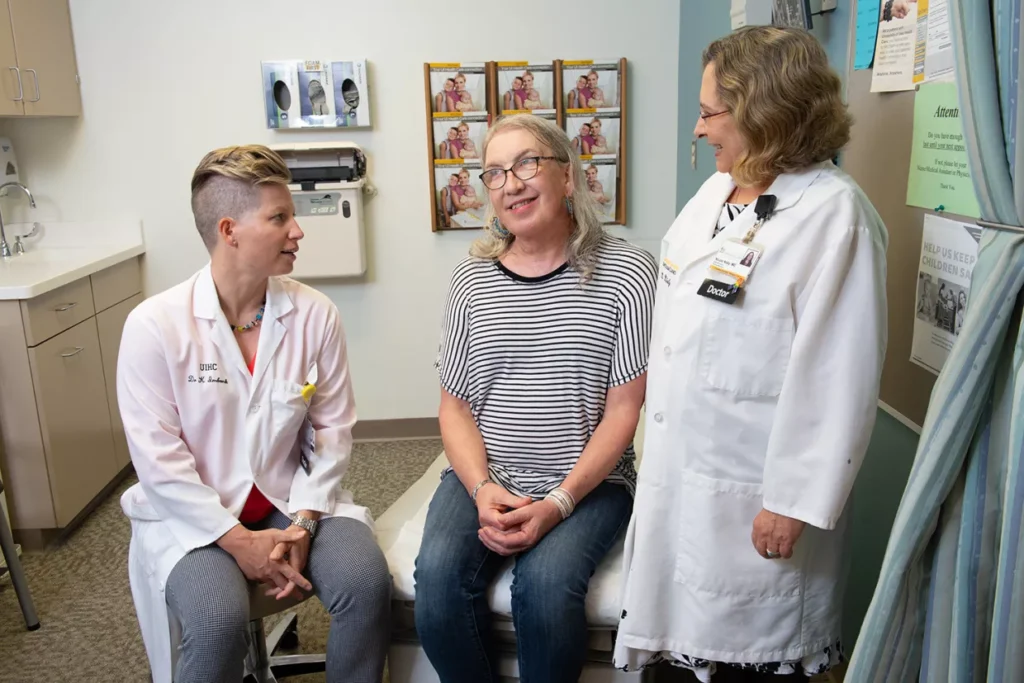
Darshan Kulkarni: One thing is seeing patients like you sitting next to you and not feeling like you need to hide who you are. Being comfortable in your own skin, not feeling like you’re being disrespected. Having caregivers be LGBTQ+ and accessible. The medicine may not change, but how you’re taken care of might. Asking how your husband is when you’re a gay man, that’s validating.
People want to know that they are seen. And if you don’t give people that opportunity, people start avoiding places where they don’t feel welcome. If that’s true, then if you can make them feel welcome, make them feel like part of that community, like their voice matters, that’s better for research, that’s better for healthcare, that’s better for the community. In the end, healthcare is a community endeavor.
Closing
Speaking with Darshan expanded many of my ideas about clinical trials in a lot of ways. Hearing how previous approaches, whether they be quotas, funnels, and/or DAPs, came and went led me to realize that while guidelines are important, blindly following mandates was never enough. Health equity requires that we look around us to the people we work with, rather than look upwards for rules and policies. If equity is not mandated, then we must work more closely, on a personal, human level, with affected people to understand how we can support their wellbeing. While this self-reflection cannot change systems alone, no change is possible without it. As Darshan told me, now is the time to look at our work and ask, ‘What does this mean to me?’